Topological ManifoldsMarzio De Corato
02 / Research

Research.

From software traces to the properties of nanostructures, studies examining the relationship between observed data, representations and explanations.

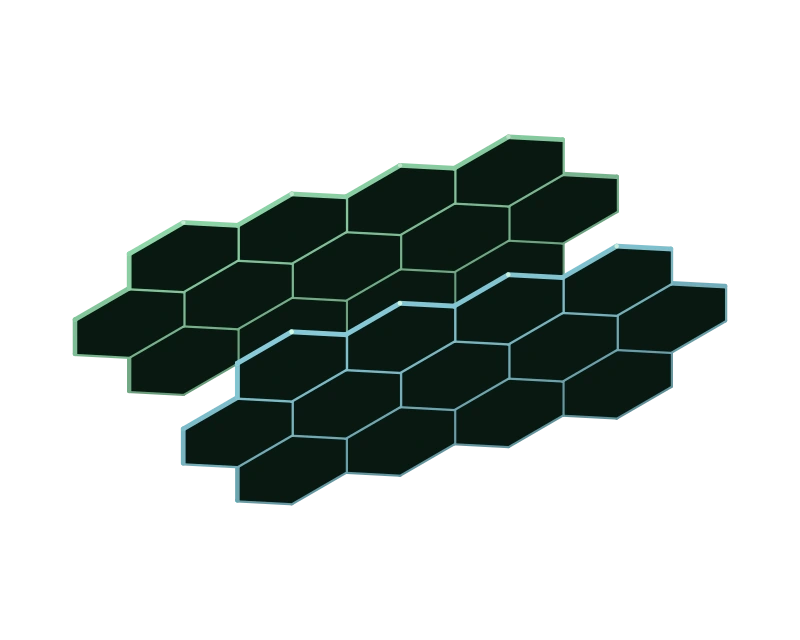
Bilayer graphene nanoflakes

Recognising malicious behaviour in program traces, understanding which variables influence a classifier’s response and relating the geometry of a nanostructure to its physical properties are problems that, despite belonging to different fields, require close attention to how data are constructed and which assumptions allow them to be interpreted.

The following entries bring together studies in cybersecurity, explainable artificial intelligence and computational physics, alongside experience in time-series analysis and quantitative methods, while classical and quantum information theory, quantum computing and systems architecture feature among my scientific interests and teaching activities. Within this framework, I am interested in how information is represented, transmitted and processed, relating the limits of models to the properties of the physical systems that realise them.

Documented research areas

Problems and findings

Theses and interdisciplinary contributions

The theses I have co-supervised addressed malware and ransomware detection, classifier interpretability and semantic change in texts using Word2Vec and graphs, while contributions to the volumes on cybersecurity and artificial intelligence in local government, and to MUSA — Multilayered Urban Sustainability Action, extended interdisciplinary discussion to the conditions in which technologies are adopted and interpreted.

Theses and projects ↗
Bibliography / 17 references

Publications

Each entry introduces the problem and methods discussed in the work, based on the consulted abstract or publisher’s synopsis. The source is shown alongside the explanation.

AIR repository
2027
Conference contributions / MACHINE LEARNING

Stability of explanations in software-trace classification

Contribution in briefBecause models that correctly classify the same programs may rely on different cues, the work examines the stability of explanations in behavioural-trace classification, considering data representations and the regularities learned by classifiers.

Full bibliographic reference

Estimating shortcut learning and inductive bias in multi-view behavioural trace classification

M. De Corato, A. Monzani, D. Bruschi

Artificial Neural Networks in Pattern Recognition, Lecture Notes in Computer Science · Springer, 2027, pp. 89–101 (ANNPR, Milan 2026)

Problem, method and findings

A ransomware-recognition dataset is used to compare different descriptions of execution: system calls, libraries and paths, hardware-counter signals and combinations of these views. Information Concordance and Selector Adjusted Information Concordance measure agreement between explanations, also accounting for feature-selection effects. In this comparison, system calls yield more stable explanations across models; other representations are more sensitive to processing choices. The finding concerns the benchmark studied and encourages joint evaluation of accuracy and the stability of the reasons underlying predictions.

Springer publisher’s abstract · 2026-11-07Source of the explanation

The work was presented at ANNPR in October 2026 and published online in September 2026; AIR UniMI assigns 2027 to the bibliographic edition of the proceedings volume.

2025
Books / AI / PUBLIC SECTOR

Artificial intelligence and local-government services

Contribution in briefThrough a survey of 72 municipalities and a prototype for classifying municipal website pages, the volume examines uses of artificial intelligence in local government in relation to the skills and responsibilities accompanying its adoption.

Full bibliographic reference

L’Intelligenza Artificiale negli enti locali

D. Bruschi, A. Ferrara, M. De Corato and S. Castano (eds.)

Milano University Press · ISBN 979-12-5510-345-5

Problem, method and findings

The volume reports a project carried out between June 2024 and March 2025, combining training, an exploratory survey with 72 participating municipalities and a prototype for automatically classifying municipal website pages. The responses reveal interest in automating repetitive tasks, data analysis and decision support, together with a demand for transparent models and human oversight. The findings concern the administrations that took part in the survey and offer a basis for designing pilot initiatives accompanied by training.

Publisher’s synopsis · 2026-11-07Source of the explanation
2025
Articles / XAI / CYBERSECURITY

Recognising ransomware from processor signals

Contribution in briefTraces left by programs in processor activity are used to recognise suspicious behaviour through a methodology that connects ransomware detection with an examination of the relationships between variables underlying classification.

Full bibliographic reference

Ransomware detection using sample entropy and graphical models: A methodology for explainable artificial intelligence (XAI) in cybersecurity

D. Bruschi, M. De Corato, A. Ferrara, S. Salini

Applied Stochastic Models in Business and Industry 41(6), e70061

Problem, method and findings

Hardware counters record aspects of processor activity during program execution. Sample entropy summarises their regularity over time; this information feeds probabilistic graphical models, which describe relationships between variables. Comparison with other classifiers allows the ability to distinguish ransomware to be evaluated, while the structure of the models helps examine the reasons for decisions. The result is an interpretable analytical methodology evaluated on the study’s data; operational deployment requires testing under the intended conditions of use.

Abstract in the UniMI institutional repository · 2026-11-07Source of the explanation
2024
Books / CYBERSECURITY

Cybersecurity in Lombardy’s municipalities

Contribution in briefThe study examines how prepared Lombardy’s municipalities are to face cyber threats, identifying support and training needs that affect the conditions in which local administrations can address security problems.

Full bibliographic reference

La Cybersecurity negli enti locali

D. Bruschi, A. Ferrara and M. De Corato

Milano University Press · ISBN 979-125-510-185-7

Problem, method and findings

The research, conducted within the MEIEC centre in collaboration with AnciLab, examines cybersecurity in Lombardy’s municipalities. The volume’s synopsis describes widespread awareness of the importance of security, alongside a need to strengthen practical protection capabilities, including against common attacks. The contribution helps explain the gap between concern about the issue and operational readiness, providing a basis for supporting local authorities.

Publisher’s synopsis · 2026-11-07Source of the explanation
2024
Conference contributions / XAI / PHYSICS

Asteroids as a test case for interpretable AI

Contribution in briefAsteroid classification provides a setting in which physical descriptions of the phenomenon make it possible to examine whether the relationships used by an algorithm to make predictions are consistent with the knowledge used to interpret the data.

Full bibliographic reference

Hazardous asteroids forecast via Markov random fields: A case study for explainable artificial intelligence (XAI)

M. De Corato, S. Salini, A. Ferrara and C. Vello

110° Congresso Nazionale della Società Italiana di Fisica

Problem, method and findings

The contribution uses CNEOS data on asteroid hazard classification to compare Markov random fields, Random Forests and Support Vector Machines. Physical knowledge of the problem makes it possible to examine both classification quality and interpretability. The results described in the abstract identify graphical models as a solution combining readable explanations with accuracy appropriate to the case studied. The subject is classification within the dataset considered; this record is not an impact forecast.

AIR abstract, consulted in indexed text · 2026-11-07Source of the explanation
2023
Conference contributions / INTERPRETABILITY

Algorithm interpretability on data derived from physical laws

Contribution in briefBy comparing what a model appears to learn from data with known physical laws, the work examines the relationship between prediction and explanation and the meaning that can be attributed to the relationships underlying an algorithm’s responses.

Full bibliographic reference

Interpretability of machine learning algorithms: How these techniques can correctly guess the physical laws?

M. De Corato, A. Ferrara, S. Salini

Statistics and Data Science Conference · EGEA

Problem, method and findings

The authors use astronomical data and data constructed from physical laws, also adding noisy variables. They train several algorithms, including neural networks, graphical models, Random Forests and statistical classifiers, and examine their behaviour through interpretation techniques. Comparison with the law that generated the data allows the learned dependencies to be assessed against the phenomenon. The contribution thus offers a way to evaluate interpretability before addressing situations in which physical relationships are less well understood.

Abstract in the AIR institutional repository · 2026-11-07Source of the explanation
2020
Articles / GRAPHENE

Reading the shape of graphene edges through vibrations

Contribution in briefThe study examines atomic vibrations in graphene nanoribbons, through which a signature of edge structure can be obtained and the shape of the nanostructure related to its vibrational properties.

Full bibliographic reference

Vibrational signature of the graphene nanoribbon edge structure from high-resolution electron energy-loss spectroscopy

N. Cavani, M. De Corato, A. Ruini, et al.

Nanoscale 12(38), 19681–19688

Problem, method and findings

The study combines electron energy-loss spectroscopy measurements with theoretical calculations. This comparison associates certain signals with vibrations of carbon–hydrogen bonds at the edges, distinguishing features of their structure. Ribbon ends also produce specific signals whose intensity can indicate average length. The relationship between spectrum and structure therefore provides a tool for characterising materials that are difficult to describe at atomic scale through visible geometry alone.

Abstract in the FAU institutional repository · 2026-11-07Source of the explanation
2018
Articles / NANOSTRUCTURES

Changing graphene’s response by changing its shape

Contribution in briefThe work studies how controlled deformation of a graphene nanoribbon can change the energy required to excite its electrons, relating changes in shape to the resulting variations in optical properties.

Full bibliographic reference

Bandgap engineering of graphene nanoribbons by control over structural distortion

Y. Hu, P. Xie, M. De Corato, et al.

Journal of the American Chemical Society 140(25), 7803–7809

Problem, method and findings

The authors compare nanoribbons with the same aromatic core but different side-chain positions. The steric bulk of these groups changes the structural distortion and, consequently, the bandgap: the energy separation between the electronic states under consideration. Theoretical predictions are compared with absorption and photoluminescence excitation measurements. The work shows how shape control, together with chemical composition, can tune the response of these systems.

Abstract in the UniMI institutional repository · 2026-11-07Source of the explanation
2016
Articles / PHYSICS

The Raman signature of graphene nanoribbons

Contribution in briefThrough light scattered by graphene nanoribbons, the work examines information about their width, edge structure and attached chemical groups, relating these features to the material’s Raman signature.

Full bibliographic reference

Raman fingerprints of atomically precise graphene nanoribbons

I. A. Verzhbitskiy, M. De Corato, A. Ruini, et al.

Nano Letters 16(6), 3442–3447

Problem, method and findings

Raman spectroscopy is compared with ab initio calculations to understand which nanoribbon features correspond to the measured signals. The work examines the effects of width, edge geometry and chemical functionalisation. Certain low-frequency vibrations are particularly sensitive to the edges; the dependence of one spectral band on the excitation is also studied. These correspondences help identify nanoribbon structure through spectroscopic measurement.

Abstract in the UniMI institutional repository · 2026-11-07Source of the explanation
2014
Articles / PHYSICS

Optical properties of bilayer graphene nanoflakes

Contribution in briefThe work compares the optical properties of small stacked graphene fragments with those of isolated fragments, examining how layer alignment and edge chemistry contribute to differences in light absorption.

Full bibliographic reference

Optical properties of bilayer graphene nanoflakes

M. De Corato, C. Cocchi, D. Prezzi, M. J. Caldas, E. Molinari, A. Ruini

The Journal of Physical Chemistry C 118(40), 23219–23225

Problem, method and findings

The theoretical work compares pairs of identical nanoflakes at different relative displacements, as well as pairs differing in size or chemical groups. The calculations predict a redshift and broadening of the lowest excitations, extending the absorption range without strongly increasing intensity. Appropriately functionalised combinations also exhibit excitations involving charge transfer between fragments. These modelling results help explain the role of interlayer interactions.

Abstract in the UniMORE institutional repository · 2026-11-07Source of the explanation
2013
Articles / TOPOLOGY

Describing carbon networks by counting connections

Contribution in briefThe arrangement of bonds between atoms is described through mathematical indices that summarise aspects of connectivity, allowing different carbon structures to be compared through quantities computed on the graph.

Full bibliographic reference

Topological study of schwarzitic junctions in 1D lattices

M. De Corato, G. Benedek, O. Ori, M. V. Putz

International Journal of Chemical Modeling 4(2–3), 9–17

Problem, method and findings

The study derives formulae for two topological indices, the eccentric connectivity index and the Wiener index, in lattices made of nanotubes connected through schwarzitic junctions. It also examines the indices as the number of units becomes very large. The Wiener index offers theoretical indications of the lattices’ relative stability: the connection network thus becomes a compact way to reason about structural differences.

BOA abstract, consulted in indexed text · 2026-11-07Source of the explanation

Bibliographic note: the BOA archive lists 2013, pp. 9–17; an earlier citation gives 2012, pp. 105–113. This record follows the institutional metadata, retaining the discrepancy for a definitive editorial check.

2013
Book chapters / TOPOLOGY

Topological models and properties of carbon surfaces

Contribution in briefBy representing atoms as nodes and bonds as connections, the work relates some physical properties of carbon surfaces to simpler topological descriptions through which differently organised structures can be compared.

Full bibliographic reference

Topological versus physical and chemical properties of negatively curved carbon surfaces

M. De Corato, M. Bernasconi, L. D’Alessio, O. Ori, M. V. Putz, G. Benedek

Topological Modelling of Nanostructures and Extended Systems · Springer, pp. 105–136

Problem, method and findings

The chapter studies negatively curved carbon surfaces, or schwarzites, comparing topological arguments with ab initio calculations. It examines the approximations under which connectivity helps describe vibrational spectra and how defects change those spectra. For certain planar schwarzites, it also compares calculated stability with indications from the Wiener index. The relationship between a network model and a physical description is discussed alongside the assumptions that delimit its validity.

Springer publisher’s abstract · 2026-11-07Source of the explanation
2013
Book chapters / NANOSTRUCTURES

Computational design of new cage-like carbon structures

Contribution in briefThe chapter proposes two possible crystalline arrangements of carbon and studies their structure and properties theoretically, using computational design to examine new cage configurations.

Full bibliographic reference

Two C28 clathrates

M. De Corato, D. M. Proserpio, M. Bernasconi, G. Benedek

Diamond and Related Nanostructures · Springer, pp. 75–89

Problem, method and findings

The two proposed forms are C28 clathrates and differ in how the structure repeats within the crystal: one is body-centred orthorhombic and the other simple cubic. Electronic properties and certain vibrations are calculated in detail for the former. The authors also discuss how units resembling small diamond fragments could assemble into the latter. These are hypothetical structures investigated with theoretical tools, illustrating a method for interpreting complex crystal lattices.

Springer publisher’s abstract · 2026-11-07Source of the explanation
2013
Book chapters / TOPOLOGY

The topology of carbon nanoribbons with a Möbius twist

Contribution in briefClosing a nanoribbon into a Möbius form changes its structural connections, which the work describes through topological indices that quantify differences introduced by the twist and allow their organisation to be compared.

Full bibliographic reference

Topological invariants of Möbius-like graphenic nanostructures

M. V. Putz, M. De Corato, G. Benedek, J. Sedlar, A. Graovac, O. Ori

Topological Modelling of Nanostructures and Extended Systems · Springer, pp. 229–244

Problem, method and findings

The chapter compares carbon-nanoribbon models with ordinary closure and with Möbius-type closure. It calculates topological invariants and studies their behaviour as the system grows, examining compactness and connections between distant parts of the network. These quantities are discussed in relation to the stability of the structures considered. The work concerns mathematical analysis of models in which twisting changes the lattice topology.

Springer publisher’s abstract · 2026-11-07Source of the explanation
2013
Book chapters / TOPOLOGY

Adding chemical information to a bond map

Contribution in briefThe study adds information about the reactivity of atoms and bonds to a molecular network’s description of atomic connections, allowing the representation of connectivity to include aspects of chemical characterisation.

Full bibliographic reference

Introducing “colored” molecular topology by reactivity indices of electronegativity and chemical hardness

M. V. Putz, O. Ori, M. De Corato, et al.

Topological Modelling of Nanostructures and Extended Systems · Springer, pp. 265–286

Problem, method and findings

“Coloured” topology assigns parts of the structure properties derived from electronegativity and chemical hardness, which describe aspects of a molecule’s electronic response. The chapter develops these indices within conceptual density functional theory and applies them to polycyclic aromatic hydrocarbons. Comparing the topological description with energy-related quantities helps investigate structure–reactivity relationships. Here, “colour” means the chemical information assigned to the network.

Springer publisher’s abstract · 2026-11-07Source of the explanation
2012
Conference contributions / PHYSICS

Dynamics and spectral properties of free-standing negatively-curved carbon surfaces

M. De Corato, G. Benedek

Epioptics-11 · World Scientific, pp. 114–131

Incomplete source

No accessible abstract is available. The bibliographic reference is provided without a summary of the findings.

2011
Book chapters / PHYSICS

Schwarzite geometry and the properties of porous carbon

Contribution in briefThe chapter traces the relationship between negatively curved carbon networks, the conditions in which they can grow and their physical properties, examining how schwarzite geometry contributes to the description of porous carbon.

Full bibliographic reference

The topological background of schwarzite physics

G. Benedek, M. Bernasconi, E. Cinquanta, L. D’Alessio, M. De Corato

The Mathematics and Topology of Fullerenes · Springer, pp. 217–247

Problem, method and findings

The review considers disordered, sponge-like schwarzites and periodic structures, relating topology to stability and possible formation pathways. It also discusses electronic properties, electron–vibration interactions and atomic-dynamics simulations that follow the network’s evolution. The contribution provides an overview of the physics of these structures in the context of the studies available at the time of publication.

Springer publisher’s abstract · 2026-11-07Source of the explanation

Explore Topological Manifolds

Complete search page ↗

Graph theory and cyber-attacks

Unaffected nodeCompromised node

When devices, services and identities are described through their relationships, system security can be studied as a structural problem in which both a vulnerability and the paths through which it could expose other resources matter.

From connections to attack paths

A graph G = (V, E) consists of vertices V and edges E. In an asset network, vertices may represent devices or services, while edges describe connections, dependencies or trust relationships. An attack graph instead represents conditions, actions or system states, depending on the model, to examine how several steps can combine into a compromise.

G = (V, E)

The analogy with an epidemic helps illustrate how a compromise can spread between nodes, provided that the conditions for each transition are considered. Credentials, permissions, vulnerabilities and configurations determine which paths are feasible; a connection alone describes a possibility of communication.

How this supports defence

Path analysis helps identify the resources reachable from an initial position and the connections that form critical passages. Comparing the graph before and after a change shows how network segmentation, reduced privileges or a vulnerability fix can interrupt particular sequences. A node’s importance depends on its role and context, so its number of connections gives only a partial account of risk.

Reading this figure

Red nodes marked with a cross represent compromised systems in the scenario; green nodes remain unaffected, while pale pulses follow the propagation paths. The map provides a conventional geographical layout for an illustrative network whose links and timing are constructed to clarify the phenomenon. It does not show observed attacks or estimate compromise probabilities.

Explore the model

The model loads when opened.

Drag or use the arrow keys to orient the model; + and − control zoom. Hold Ctrl or ⌘ to zoom with the wheel. Esc closes the dialog.

Topological Manifolds

Interface preferences

Sound remains optional and is controlled by the speaker in the header. Background music has its own player below.

Card entry, clicks and page changes use soft accents; scrolling stays silent.

Original soundtrack · 4:30

Descending Fields

0:00 / 4:30

Music starts when you press Play.

About the composition ↗
Topological Manifolds

Scientific formulas

Relations, assumptions and study references. These are not empirical results from the author’s research.

Research · Teaching · Exploration

Topological
Manifolds

Follow the code, explore the forms. Choose how to enter.

Music and effects have separate volume controls.

topological-manifolds / terminal
Visual transition

Opening the laboratory

Opening the laboratory…

0%

Destination